
NIE vs NIF vs TIE vs DNI: 6 Spanish ID numbers compared
TL;DR
- The NIE is for foreigners. The DNI is for Spanish citizens. Nobody holds both — same administration, different document.
- For individuals, the NIF (tax ID) is the same number as your NIE or DNI — it's a role, not a separate card.
- The TIE is a physical card that displays a non-EU resident's NIE. The card expires with the permit; the number never does.
- Formats: NIE = X/Y/Z + 7 digits + check letter. DNI = 8 digits + check letter. NUSS = 12 digits. CIF = letter + 7 digits + control.
- Fees: NIE €9.84. TIE first €16.08. TIE renewal €19.30. Larga duración €21.87. EU cert €12.00.
NIE service since 2013 · 17 000+ clients handled · 4.9★ on Trustpilot
Facts verified 22 September 2026 against the Sede Electrónica de la Policía Nacional and the official fee schedule.
Key facts: all six identifiers in one table
| Full name | Issued by | Who gets it | Format | What it's for | Expires? | |
|---|---|---|---|---|---|---|
| NIE | Número de Identidad de Extranjero | Dirección General de la Policía | Foreigners with economic, professional or social ties to Spain | X, Y or Z + 7 digits + check letter | Identifies a foreigner in every official dealing; doubles as their NIF | Never — for life |
| NIF | Número de Identificación Fiscal | Agencia Tributaria (derived automatically for individuals) | Everyone who pays Spanish tax | = DNI number for Spaniards, = NIE for foreigners; entities: letter + 7 digits + control char | Tax identification | Never |
| DNI | Documento Nacional de Identidad | Dirección General de la Policía | Spanish citizens only | 8 digits + check letter | National identity number and card | Card renews; number is for life |
| TIE | Tarjeta de Identidad de Extranjero | Policía Nacional | Non-EU citizens with Spanish residence authorisation | A physical card displaying the holder's NIE | Proves residence status; carries photo and fingerprints | Yes — with the underlying permit |
| NUSS | Número de Usuario de la Seguridad Social | Tesorería General de la Seguridad Social | Anyone who works or interacts with social security | 12 digits | Social security contributions and benefits | Never |
| CIF | (historic) Código de Identificación Fiscal — today the entity NIF | Agencia Tributaria | Companies and other legal entities | Letter + 7 digits + control character | Corporate tax identification | Never, while the entity exists |
No memorising needed once you see the logic: Policía issues identity (NIE, DNI, TIE), tax agency issues fiscal identity (NIF, the old CIF), social security issues its own number (NUSS). One person never needs all six.
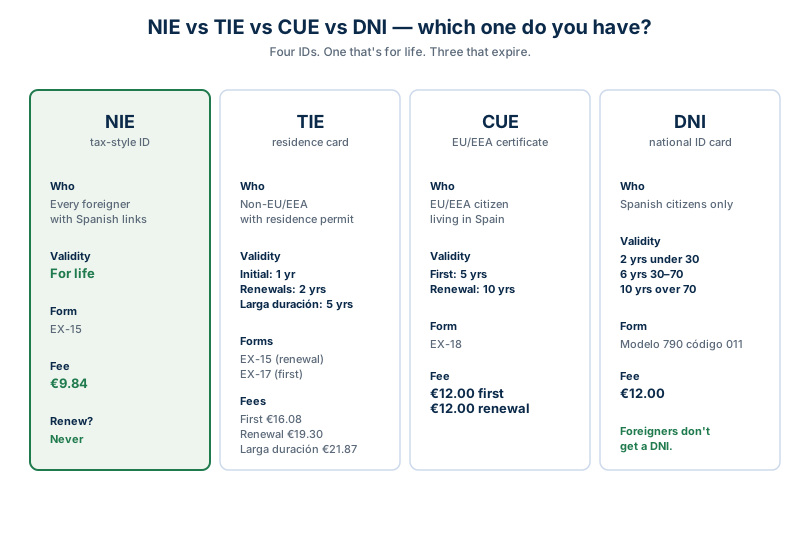
Number vs card: NIE vs TIE
The single most expensive confusion in Spanish paperwork is number versus card. The NIE is a number on a white A4 certificate. It costs €9.84 (tasa 790/012), never expires, and is not a residence permit. The TIE is a card — the Tarjeta de Identidad de Extranjero — issued to non-EU citizens who already hold residence authorisation. The card shows your NIE on its face, carries your photo, and expires together with the permit behind it.
That is why the fees differ: the TIE has its own lines on the same 790/012 form — €16.08 for first issue, €19.30 for renewal. Paying a TIE fee does not get you a NIE, and holding a NIE does not entitle you to a TIE; the card requires a residence permit first. The full fee table, line by line, is in NIE documents, forms and the fee.
Same digits, different purpose: NIE vs NIF
For individuals, the NIF is not a number you apply for — it is a role your existing number plays. The moment a Spaniard deals with the Agencia Tributaria, their DNI number acts as their NIF; the moment a foreigner does, their NIE acts as their NIF. Same digits, different purpose. There is no separate "NIF application" for a person, no second card, and no extra fee.
The exception is legal entities: companies identify with an entity NIF (letter + 7 digits + control character) issued by the Agencia Tributaria. That identifier was historically called the CIF, and the old name survives in everyday speech and in bank forms long after the law merged it into the NIF.
DNI: the citizens' counterpart
The Documento Nacional de Identidad is what Spanish citizens carry: 8 digits plus a check letter, issued by the Dirección General de la Policía, on a card that is renewed periodically while the number stays for life. A foreigner never receives a DNI — the NIE is the foreigner's equivalent, one digit longer and prefixed with a letter. X-series NIEs are exhausted; Y has been issued since 2008 and Z since 2022, so all three prefixes remain valid in circulation.
NUSS: the outsider on the list
The Número de Usuario de la Seguridad Social — 12 digits, issued by the Tesorería General de la Seguridad Social — identifies you to the social security system, not to the police or the tax agency. You need it the first time you work in Spain or register for benefits, and it lives for life alongside your NIE or DNI without replacing either. Employers routinely ask for the NIE and the NUSS together; they are different numbers from different administrations.
Which one do you actually need first?
For almost every newcomer the answer is the NIE: banks, notaries, employers and the tax agency all key their records to it, and it works as your NIF from day one. How to request it — including without travelling, via a consulate or a power of attorney — is covered step by step in the NIE number in Spain guide.
⚠ Scams to avoid
- ✗ "Buy your separate NIF here." For individuals no separate NIF exists: your NIE (or DNI) is your NIF. A service selling a personal "NIF application" is selling a number you already have.
- ✗ "Upgrade to the TIE fee for a stronger NIE." €16.08 and €19.30 pay for the card procedures, not a better number. Paying a higher concept on the 790/012 gets your proof of payment rejected.
- ✗ "Your NIE has expired — renew now." NIE numbers never expire. Only the TIE card and the underlying permit have renewal dates; "NIE renewal" offers trade on the confusion between number and card.
Frequently asked questions
Is the NIE the same as the NIF?
For individuals, yes in practice: once you have a NIE, it functions as your tax identification number (NIF). Companies have a separate entity NIF (historically called CIF) issued by the Agencia Tributaria — letter + 7 digits + control character.
Is the TIE the same as the NIE?
No. The NIE is a lifetime number on a paper certificate (€9.84, never expires, not a residence permit). The TIE is a physical residence card that displays the NIE on its face, carries your photo and fingerprints, and expires with the residence permit behind it.
Can a foreigner get a DNI?
No. The DNI (8 digits + letter) is for Spanish citizens only. The foreigner's equivalent is the NIE; non-EU residents additionally carry the TIE card if they hold a residence permit.
What's the difference between NIE and NUSS?
Different administrations, different numbers. NIE = police/tax ID for foreigners (9 chars). NUSS = social security number (12 digits). You need both if you work in Spain.
Does the NIE ever expire?
No. The number is assigned once and is valid for life. The TIE card has an expiry tied to your residence permit, but the NIE number underneath stays yours forever.
What is the entity NIF (formerly CIF)?
Companies and other legal entities use an entity NIF — letter + 7 digits + control character — issued by the Agencia Tributaria. Historically called CIF. Spanish banks and notaries still ask for 'CIF' on forms long after the law merged it into the NIF for entities.
Which document should I apply for first?
The NIE, in 99% of cases. Banks, notaries, employers and the tax agency all key their records to it, and it works as your NIF from day one.
Related guides
Sources
- Sede Electrónica de la Policía Nacional — Asignación de NIE
- Sede Electrónica de la Policía Nacional — Tasas administrativas (€9.84 / €16.08 / €19.30 / €21.87 / €12.00)
- Orden INT/2058/2008, de 5 de julio — NIE letter series (BOE-A-2008-12050)
- Real Decreto 557/2011, Art. 206 — Reglamento de Extranjería
Reviewed by the Happy Residence S.L. team. Identifiers, issuers, and fees reflect the current Sede Electrónica documentation. We re-verify after each regulatory change. We are an administrative assistance service, not a public administration.